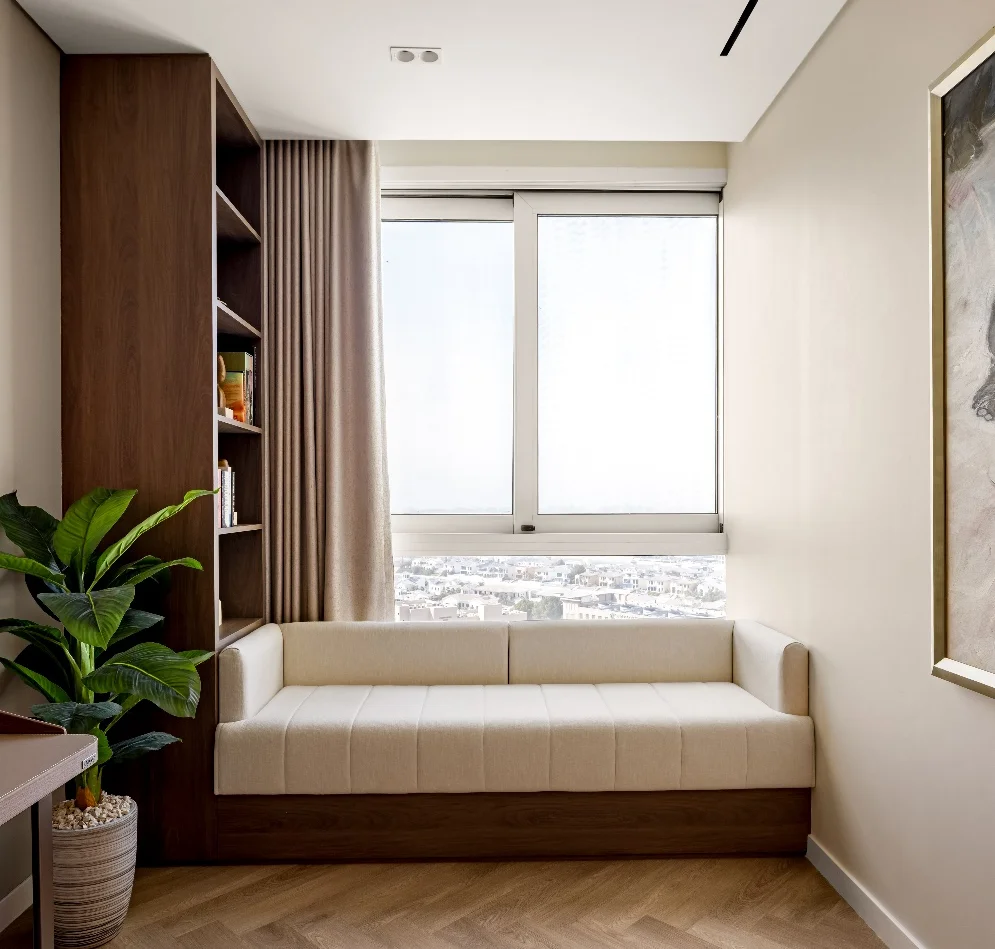
Quilted and Embossed Upholstery Techniques
In luxury interiors, surfaces do far more than fill space — they shape how a room feels. Quilted and embossed upholstery are perfect examples of this idea. These techniques add depth, texture, and character, turning walls and furniture into visual highlights rather than simple background elements.
Quilting: Structure and Rhythm
Quilting is defined by its stitched patterns, where raised seams and recessed channels create a sense of order and precision. The repetition of stitches forms a subtle rhythm, giving the surface a tailored and refined appearance. Light gently grazes the raised contours, enhancing the texture and creating soft shadows that shift throughout the day.
When applied to upholstered walls, quilting becomes both decorative and functional. The padded panels help absorb sound, making spaces feel quieter and more comfortable. At the same time, light diffuses smoothly across the surface, adding warmth and softness. The result is an interior that feels balanced, calm, and timeless.
Embossing: Depth and Expression
Embossed upholstery introduces texture through controlled compression rather than stitching alone. The material is shaped to create patterns, folds, or indentations that bring dimension and visual interest. Buttoned upholstery, often seen in classic tufted designs, is a familiar example. Symmetry and precision define the layout, while the gentle folds create rich highlights and shadows.
This interplay of depth and light gives embossed surfaces a sense of richness and sophistication. The effect is both tactile and visual, inviting attention without overwhelming the space.
Material Matters
The success of quilted and embossed upholstery depends heavily on material selection. Fabrics must hold their shape, maintain depth, and respond beautifully to light. Velvet, leather, and tightly woven textiles are popular choices because they sustain compression and reveal texture elegantly. Craftsmanship is essential — precise detailing ensures the patterns remain clean, consistent, and visually striking.
Quilted and embossed upholstery are more than decorative techniques. They influence acoustics, enhance lighting effects, and define the overall mood of a space. With the right balance of discipline and design, these surfaces transform interiors into environments that feel polished, inviting, and effortlessly refined.
True elegance emerges not from excess, but from thoughtful alignment — where texture, light, and form work together in perfect harmony.